8 August 2025 · 5 min · Stian Andreassen
I had it under control, then came a pandemic, politics, war and 13 interest rate hikes

The project began with a strong run on the stock market. Around two million kroner of surplus set aside from operations was invested and ended up at roughly eight million kroner realised over three years. It is hard to claim that this didn't involve some luck — because it did. But the result was also down to:
- a lot of deep research into trends, macro and geopolitics
- a clear strategy
- discipline
- risk management
- realising at the right time
- a deliberate change of investment profile
The property, purchased in an established residential neighbourhood, represented both security and potential. The plan was simple: preserve and refurbish the home. Rent it out and retain value, then develop the relatively large plot further. This was just before Christmas in 2019. I had it under control.
2. Pandemic, halted work and the contractor's bankruptcy

The upgrade was underway when the country shut down in 2020. Society came to a halt. The contractor went bankrupt, and it became difficult to know when, how — or whether — the work could be resumed in an acceptable manner within a reasonable time frame.
Lesson:
When circumstances change dramatically, we have to quickly adjust the map so it matches the terrain.
I therefore chose to explore the possibility of developing the entire property into a new build. The underlying conditions made this possible, though with clear challenges to overcome.
3. I wanted to develop — but not carry all the risk myself
Even though the property was already secured, I didn't want to stand alone with all the risk. So a partnership was established with a solid player who took on:
- future §12 guarantees
- insurance
- all outlays
- project execution
… in exchange for a building clause, a guarantee sum with flexible activation, a 70/30 split of the result in my favour, rights agreements and cost-sharing in the event of a stalled project.
In my assessment, this was a balanced model that distributed responsibility, risk and opportunity well, even though I had no prior experience.
4. The noise report that failed to account for future conditions
The property was just inside the yellow noise zone, and a noise report was required. The first report proved very challenging for the project and cost me a few sleepless nights. By asking pointed questions and thoroughly reviewing both the premises and the assumptions behind the report, it gradually became clear to me that the report failed to account for the concrete planned transformation and zoning plans in the area, which over time would significantly reduce noise going forward.
A new report from the same provider — now based on the correct assumptions — produced an entirely different conclusion, which paved the way for good outdoor areas and floor plans.
Lesson:
The premises behind a professional report matter more than its conclusion.
5. The right architect. The right project. A good process.
The architect understood the property, the character of the area and the project's ambitions. We developed two semi-detached houses that I still believe would have added something positive to the area.
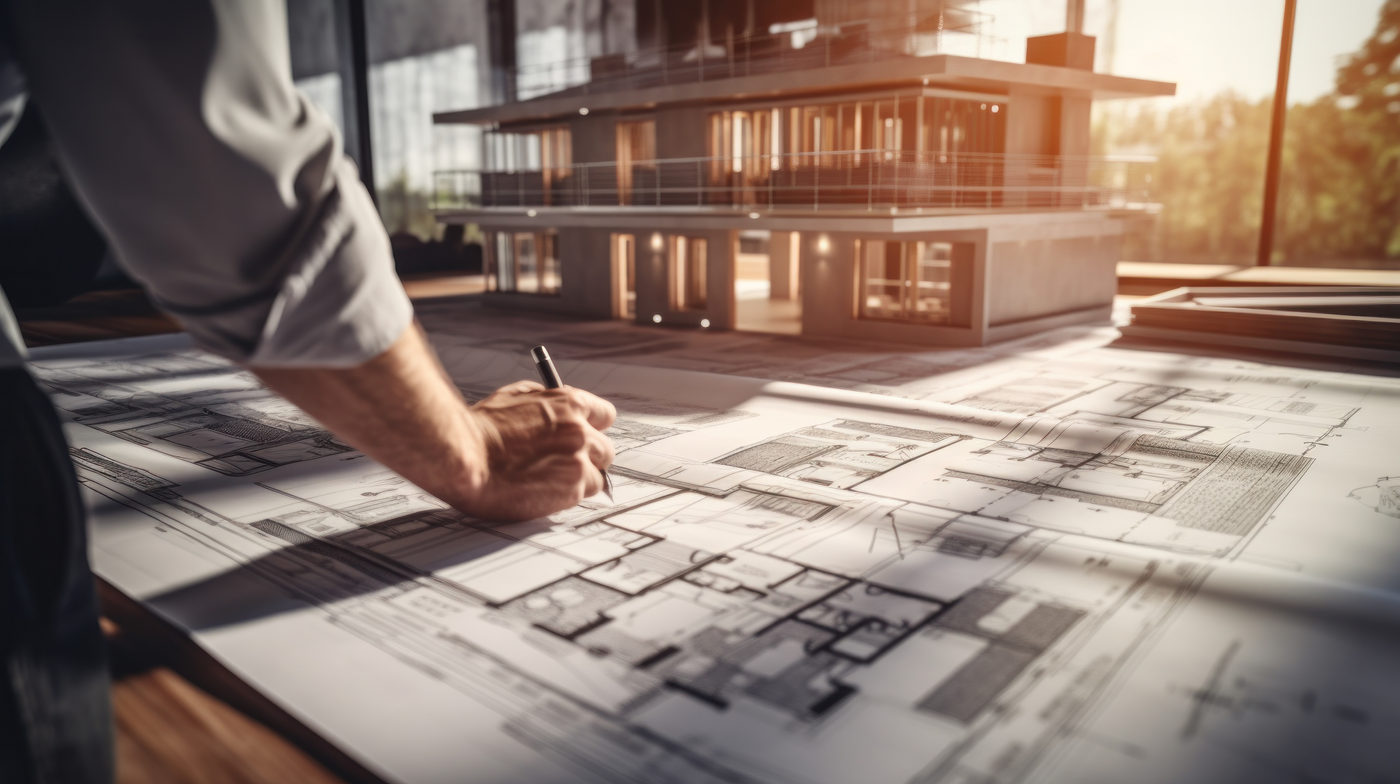
The internal process was good — and this was my first complete development run with my own money. Naturally, the project meant a great deal to me personally.
The application then went to the Planning and Building Authority.
6. Pause → tracking → rewind → play — and repeat
What followed was a process marked by long processing times and unpredictable pauses. This probably wasn't normal, given the pandemic and challenges with capacity, availability and sick leave.
Among other things, it led to:
- repeated postponements
- cancellations of scheduled digital meetings
- a lack of coordination between agencies
- a breach of Section 17 of the Public Administration Act and a subsequent time-interrupting complaint
The process was demanding to navigate, but in hindsight it is understandable that capacity was severely reduced during that period.
Furthermore, there was:
- a rejection at department level
- approval by the city government
- a complaint from neighbours
- political review with a narrow majority against
Main justification: visual qualities and the width of the road running past the property.
7. We offered to give up 2.5 x 30 metres of our own plot — to no avail
To address the rejection, I offered to adjust by giving up to 2.5 metres in a strip of our own plot to widen the road and establish a pavement, along with a change to the shape of the roof.
The solution was assessed in a new political review, but what had been a narrow majority against the project ended up as a unanimous rejection:
- a new political review
- a unanimous no
- a complaint to the County Governor
- the rejection upheld
Despite differing views along the way, I respect that there are many considerations in such processes, and that the outcome ultimately came down to a no.
Lesson:
Even good projects and intentions meet resistance that cannot necessarily be resolved through compromise.
8. Market risk around the project

While the project was stuck in a very slow political process, Russia attacked Ukraine (where we have had 90% of our production for 16 years, and still do today), and interest rates rose steadily. Thirteen interest rate hikes, inflation and building costs completely out of control noticeably affected the project's risk assessments.
Despite a low loan-to-value ratio, the cost increase meant that:
- the cost of capital changed significantly
- overall risk increased
- the liquidity burden grew
- the market shifted
- margins became more exposed
This contributed to a fresh assessment of the project's realisable potential.
9. Personal attachment and the need for objectivity. I had it under control
I had a strong attachment to the project. That comes naturally when you have been the driving force and put in vast amounts of time, resources and sleepless nights.

Over time, I noticed that the combination of:
- political unpredictability
- interest rate developments
- personal investment
… made it difficult to assess the project objectively.
Lesson:
When the engagement grows stronger than the calculations and the numbers, it's a sign that it's time to reconsider.
10. I called a halt — and the lesson outweighed the loss
In the end, I made the decision to fold and sell the property. It wasn't because I didn't want to realise it in one way or another, but because the assessment of capital needs, risk, market and objective factors indicated it was the right thing to do.

It cost time, resources, capital and sleepless nights, but the lessons have been significant:
- risk must be assessed holistically
- the political process is highly unpredictable
- don't automatically accept professional reports
- partners are decisive
- objectivity is a prerequisite
- interest rate developments affect everything
- macroeconomic indicators give a good understanding of the near future
- sometimes the right decision is to fold
This experience has made me better.
I know what happens when plans meet reality, and how risk feels from the inside, not just on paper.
There are no textbooks that provide such experiences. You get them by running the course yourself.
I did it — and it has made both me and Maestro Media better.
(This post was written by Stian Andreassen. SEO formatting adapted by AI.)
- Home
- Industry
- Gallery
- Contact
- Blog