29 November 2025 · 3 min · Stian Andreassen
AI experiment: from 3D illustration to mood video in minutes?

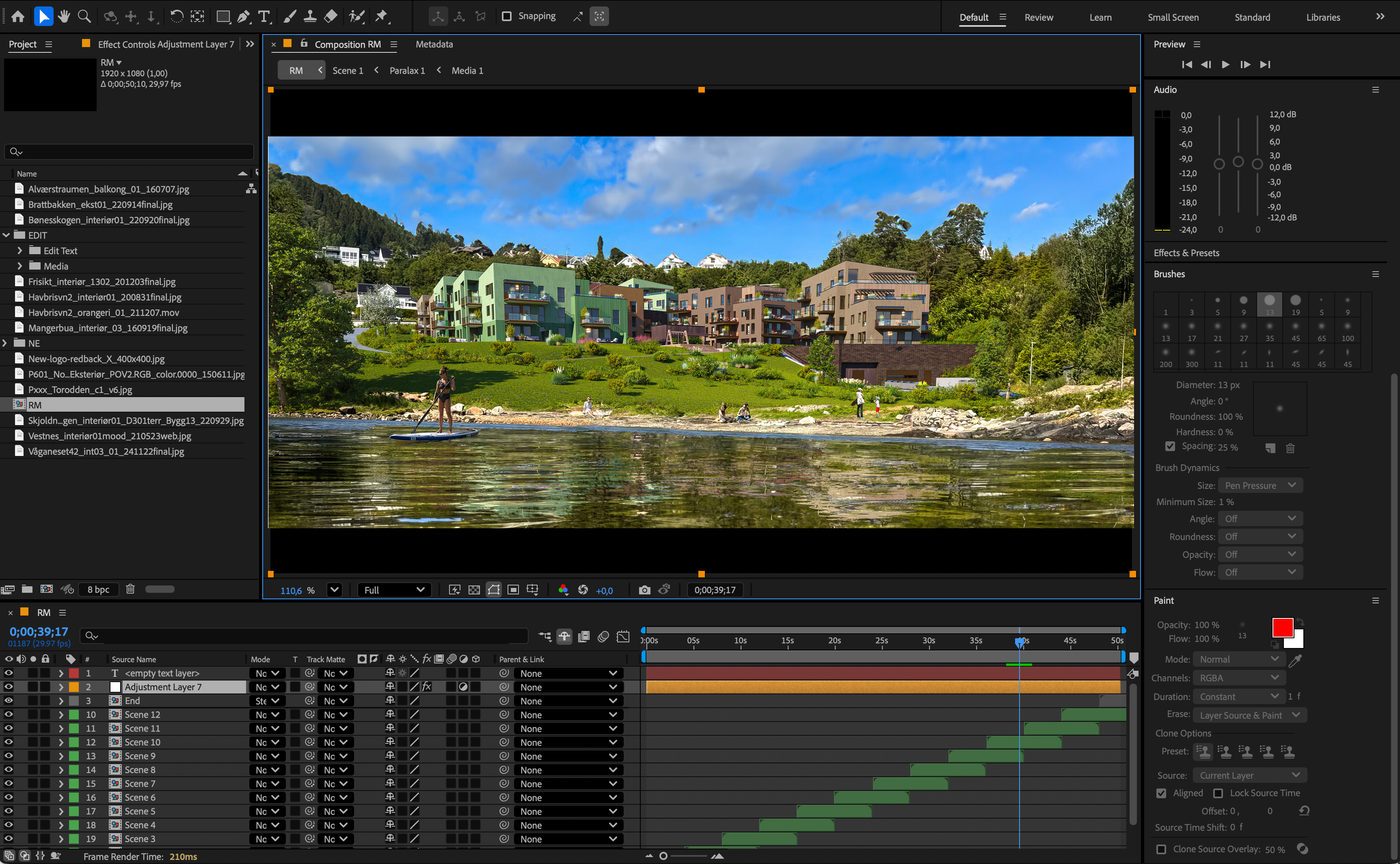
We've long produced mood videos and animations using both traditional tools and AI tools, though the latter came with plenty of limitations. While working on a client case on our own initiative, we set out to test a new technique: animating a finished 3D exterior illustration using GPT-5, Gemini DeepMind and the recently launched Veo 3.1.
The goal wasn't to make a full-blown animated film, but to see whether we could create feeling – movement, atmosphere and life – without resorting to time-consuming processes, whether in After Effects/traditional compositing or in MotionLeap/Lightricks, CapCut and so on, which are also fast but come with certain limitations.
The result showed that AI can absolutely lift a finished 3D scene in a way that makes it more alive while still believable – and do it very quickly. At the same time, it became clear which limitations still apply.
Here's a glimpse of what we did, what worked and what doesn't – yet.
1. The starting point: an approved 3D illustration
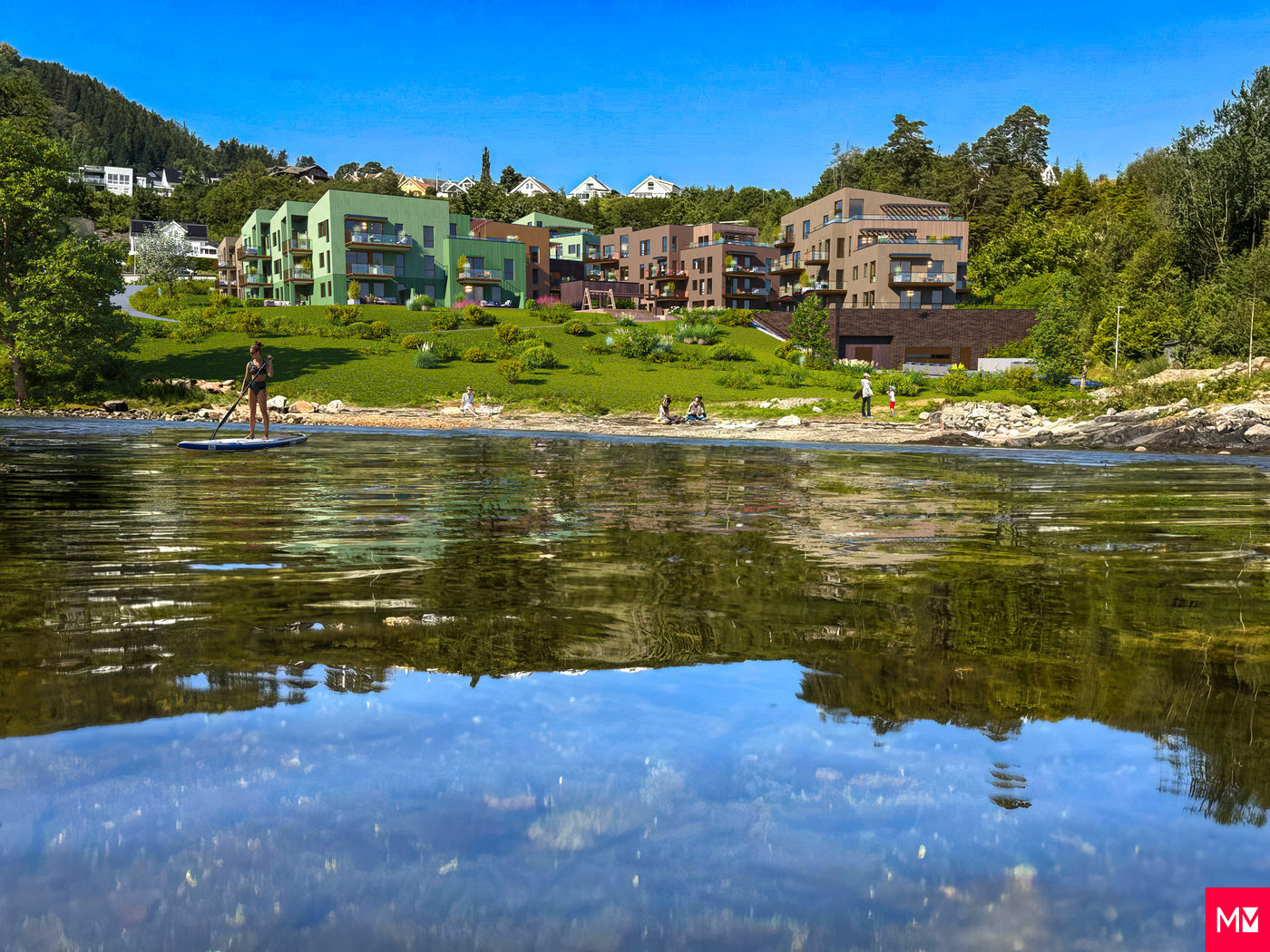
The scene had been rendered and approved some time ago:
- the buildings were fully designed and planned
- composition and lighting were exactly as intended
- people and environmental elements were placed
- the quality was high, as always in our 3D illustrations
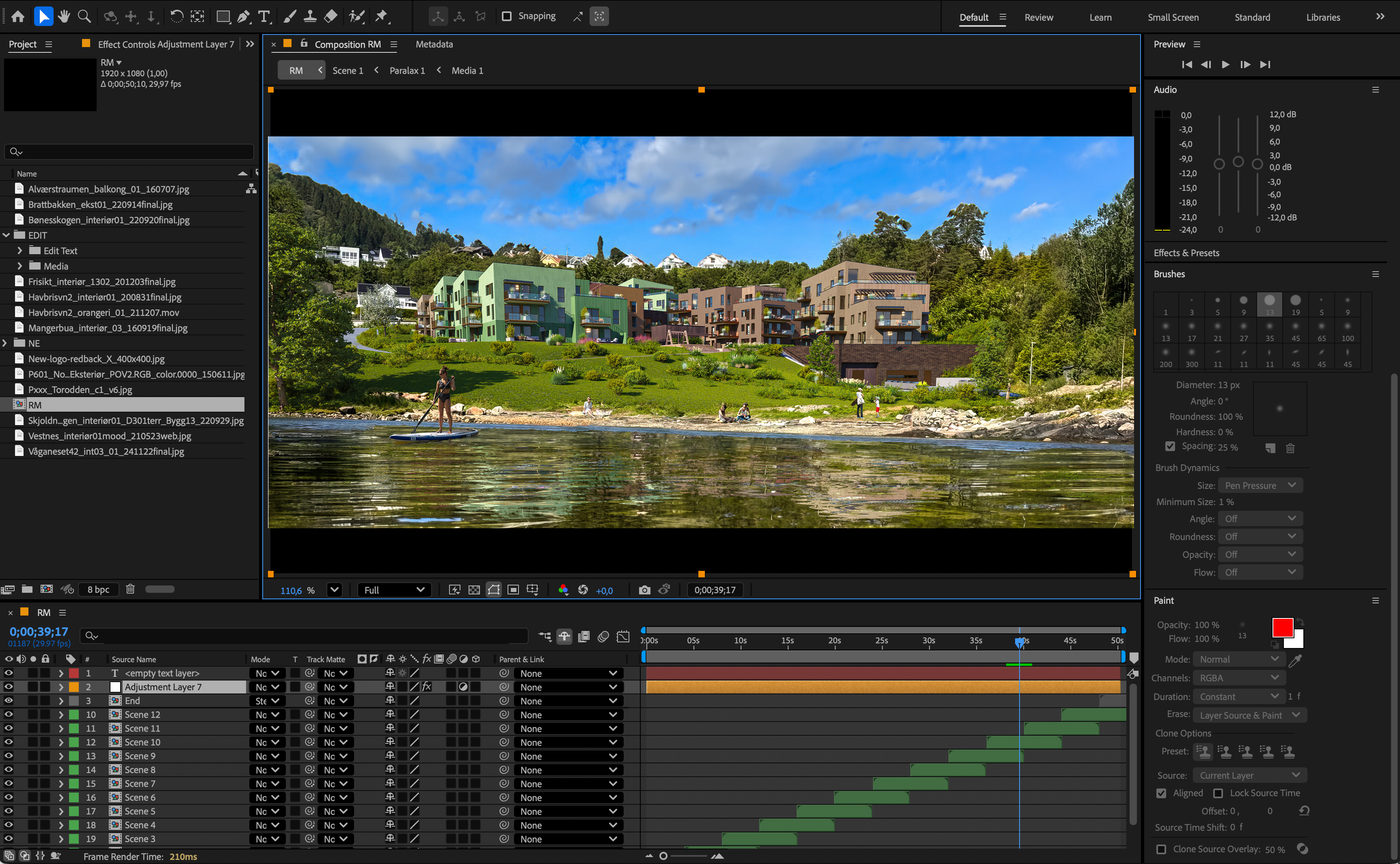
In practice: a still image meant to communicate proximity to the sea, not created with animation in mind.
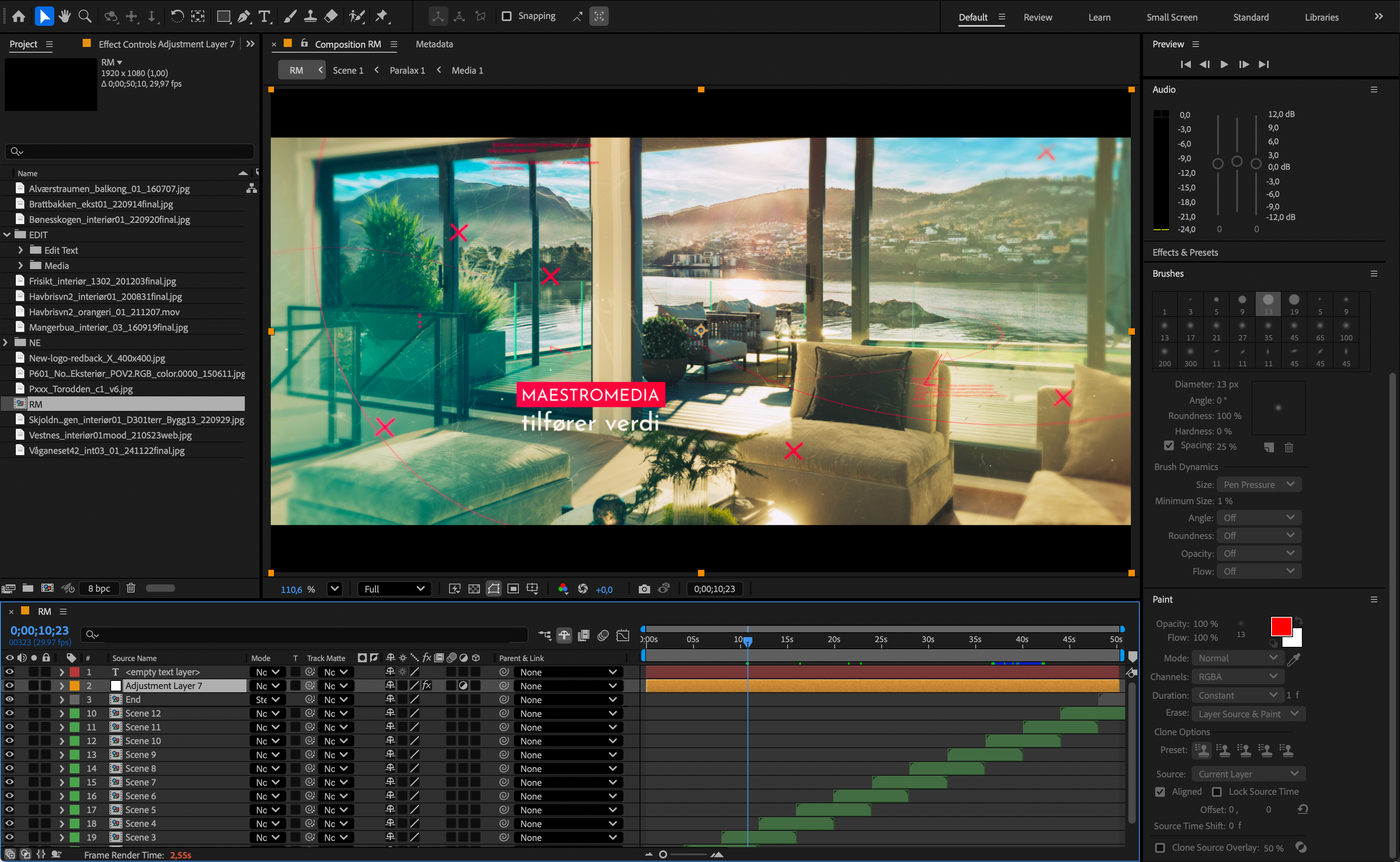
Previously, the next step would have been a full round in After Effects.
Layer structure, masking, rotoscoping, tracking, chroma key, feathering, alpha, rasterizing, blending, rendering, to name a few.
"Several days" of work if you wanted to do it properly.
2. What we wanted to test
What we wanted to explore was whether AI could add:
- subtle camera movement
- life in water or vegetation
- small atmospheric effects
- light dynamics
- a cinematic calm that builds feeling
Without altering the geometry and without introducing artifacts that ruin the scene. From 3D illustration to mood video in minutes.
3. How the test was done (and how fast it went)
We used a combination of:
- GPT-5.1 to generate optimal prompts
- Gemini to analyze the scene
- Veo 3.1 for the video animation itself
The process took minutes.
Not hours – and definitely not days.
AI understood the scene well enough to add:
- natural water movement
- shifting reflections
- a smooth camera flow
- sky movement that added more depth
- atmosphere that matched the existing lighting
The result was a video that was still the illustration but felt alive, even if a few effects emerged that we're itching to fix. The sky in particular undermines the believability.
4. What worked surprisingly well
Some elements AI handled impressively well:
- Water and reflections
Veo 3.1 managed to simulate movement without ruining the reflection.
- Atmospheric light
Subtle changes in shadows and sky gave it a cinematic feel.
- Camera movement
Worked very well, especially in scenes with clear depth.
- Vegetation
A light breeze in trees and bushes worked without distorting the shape. These are classic "time sinks" in traditional compositing.
5. The limitations also became clear
Even though AI saves time, that doesn't mean everything can be left to the technology.
AI can misread both large and small elements
Large camera movements or the wrong prompt can, for example, result in distorted geometry.
Consistency over time
An AI video can't be reproduced 100% if the client wants revisions.
A traditional pipeline is better where control is essential.
AI doesn't understand the project's premises
It doesn't know the zoning regulations, floor plans, material choices or light contrasts the way we do.
That's why AI must always be tightly directed – not left to interpret too much.
6. What this means for production going forward
AI doesn't replace rendering, modeling or classic animation.
But it gives us a new tool where:
- a still image can be brought to life
- communication can be strengthened
- launches and follow-ups can gain more "feel"
- upsells can be given more weight
- marketing material can be upgraded quickly
- short sequences don't require a full production
As long as we use the technology deliberately, critically and with professional responsibility, this is a highly useful addition.
7. Our conclusion after the test – from 3D illustration to mood video in minutes
AI can deliver visual added value in an extremely short time, but the framework has to be right.
The case showed that:
- atmosphere can be created in minutes
- AI is a tool, not a replacement
- good 3D scenes can produce good AI videos
- the result depends heavily on the prompt
- fixes and adjustments become more demanding than usual
In short:
This isn't a shortcut, it's a supplement.
And a very exciting one.
(This post was written by Stian Andreassen. Layout adapted for SEO by AI.)
- Home
- Industry
- Gallery
- Contact
- Blog